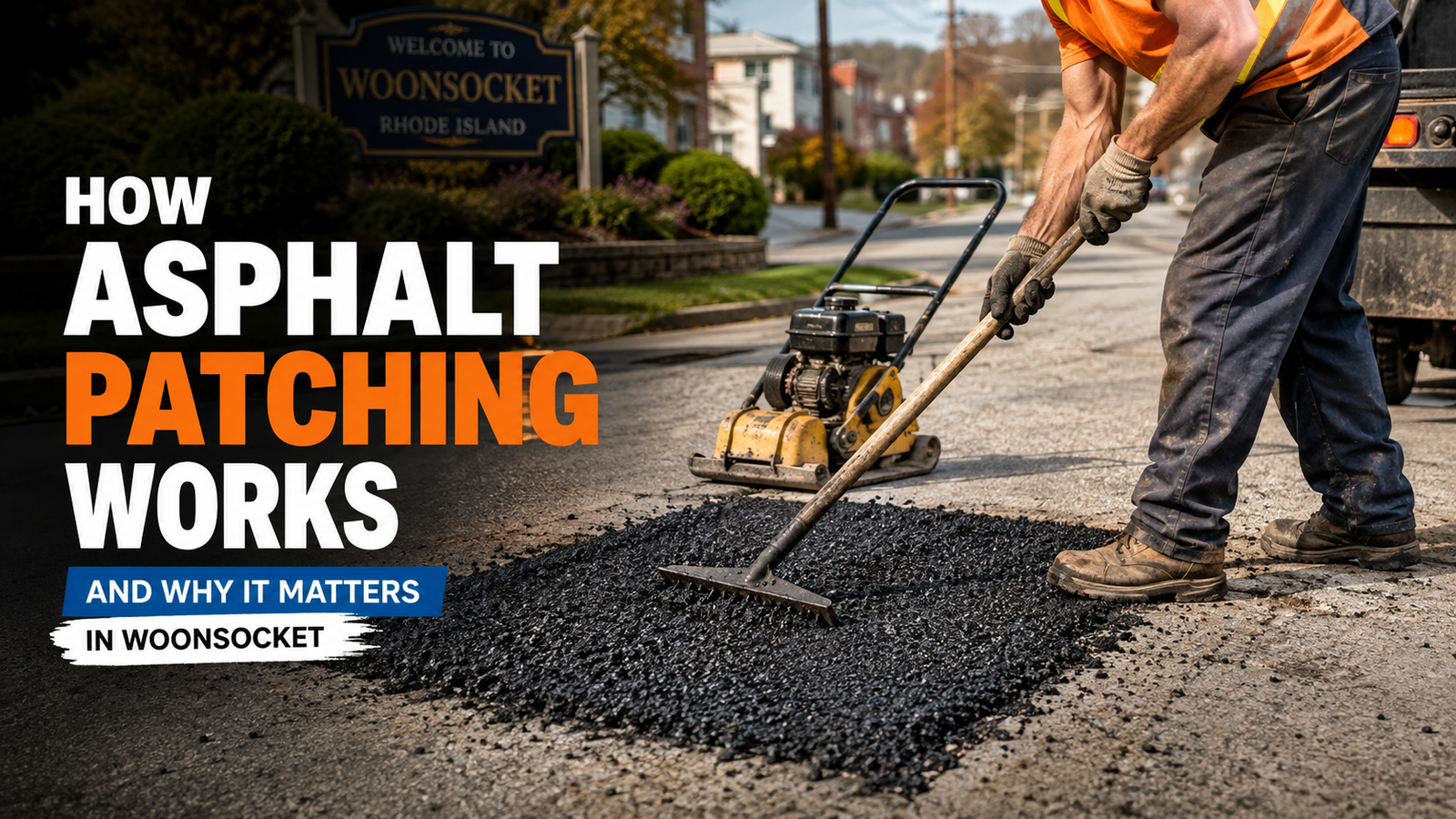
Asphalt Patching Woonsocket is one of the most common and cost-effective ways to address localized damage on a driveway or parking lot before it spreads into a larger structural problem. Rather than replacing an entire paved surface, patching targets specific areas, potholes, alligator cracking, or sections weakened by water infiltration, and restores them to a stable, functional condition. In Woonsocket, where freeze-thaw cycles accelerate pavement wear each winter, understanding how patching works helps property owners recognize when it’s an appropriate solution and when more extensive repair is needed.
What Causes Asphalt Damage in the First Place
Before diving into how patching works, it helps to understand what leads to the damage being repaired. Common causes include:
- Water infiltration. Cracks allow water to seep beneath the surface, where it can undermine the base layer, especially when it freezes and expands during winter.
- Heavy or repeated traffic loads. Pavement not designed for the weight or frequency of vehicles using it tends to develop stress cracks and rutting over time.
- Base failure. An inadequately compacted or unstable base beneath the asphalt is often the underlying cause of potholes and sunken sections, even when the surface layer itself was installed correctly.
- Age and oxidation. Over years of sun exposure, asphalt gradually becomes more brittle, making it more susceptible to cracking under stress.
Two Main Approaches to Asphalt Patching
Full-depth patching
This method involves removing the damaged asphalt completely, down to and including the compromised base material, and rebuilding the area from the ground up. A full-depth patch typically involves excavating the affected section, repairing or replacing the base as needed, and installing new asphalt compacted to match the surrounding surface. This approach addresses the root cause of the damage rather than just the visible symptom, making it the more durable option for potholes and areas with underlying base failure.
Surface or “throw-and-roll” patching
This is a faster, more temporary method often used for quick repairs, particularly during colder months when full-depth repair materials don’t cure as effectively. Asphalt patch material is placed directly over the damaged area and compacted, without excavating down to the base. While effective as a short-term fix, surface patching doesn’t address underlying base issues and may need to be revisited with a more permanent repair later.
Why Timing Matters for Patch Repairs
The timing of a patch repair significantly affects how well it performs. Patches installed during warmer months typically achieve better compaction and adhesion, since the surrounding asphalt and patch material are both more workable at higher temperatures. Cold-weather patching, while sometimes necessary to address safety hazards like a dangerous pothole, often requires revisiting the repair once temperatures warm up to ensure a long-lasting fix.
Common Questions About Asphalt Patching
How long does a patch repair last?
This depends heavily on the type of patch and the underlying cause of the damage. Full-depth patches that address base issues can last many years, comparable to the surrounding pavement. Surface patches, particularly those installed as temporary cold-weather fixes, tend to have a shorter lifespan and may need follow-up repair.
How can you tell if a pothole needs full-depth repair versus a simple patch?
Potholes that keep reappearing after being filled are usually a sign that the underlying base has failed and needs to be addressed, not just the visible hole. A paving professional can assess the extent of subsurface damage by examining how the pothole formed and how the surrounding pavement is holding up.
Is patching a permanent solution or does it always need to be redone?
Properly executed full-depth patching can be a long-lasting solution, provided the base issue causing the damage is fully addressed. However, if a lot has widespread cracking or drainage problems across a large area, patching individual spots may only be a temporary measure until more comprehensive resurfacing or replacement becomes necessary.
Why do some potholes come back after being filled?
This typically happens when a patch was applied without addressing the underlying cause, whether that’s a compromised base, ongoing water infiltration, or drainage issues that continue to undermine the repair from below.
Recognizing When Patching Is the Right Approach
Patching works best when damage is relatively isolated rather than spread across a large portion of a surface. Good candidates for patching include a small number of scattered potholes, cracks that haven’t yet spread into widespread alligator patterns, and localized damage near drains or low points that hasn’t compromised the surrounding pavement’s structural integrity. When damage covers a significant percentage of a lot or driveway, or when drainage problems point to systemic base failure, resurfacing or full reconstruction usually offers a more durable and cost-effective long-term solution than repeated patching.
The Connection Between Patching and Preventive Maintenance
Prompt patching plays an important role in a broader pavement maintenance strategy. Addressing small areas of damage quickly, before water infiltration and continued traffic use worsen the problem, helps prevent isolated issues from spreading and requiring more extensive repair later. This is particularly relevant heading into winter in Woonsocket, when existing cracks and small potholes are especially vulnerable to rapid deterioration from freeze-thaw cycling if left unaddressed.
How Weather Conditions Influence Patch Repair Scheduling
Beyond ambient air temperature, factors like recent precipitation and surface moisture also affect when patch repairs should be scheduled. Asphalt patch material generally needs a dry surface to bond properly, so repairs are typically planned around forecasted dry weather whenever possible. In situations where a pothole poses an immediate safety hazard during wet conditions, a temporary repair may be used to address the hazard, with a more permanent, properly bonded patch scheduled once conditions improve.
Why Consistent Patch Quality Matters for Appearance and Safety
Beyond structural performance, well-executed patches also affect the overall appearance and safety of a paved surface. Patches that aren’t properly leveled with the surrounding pavement can create tripping hazards for pedestrians or an uneven driving surface that’s noticeable to vehicles passing over it. A carefully finished patch should sit flush with the surrounding asphalt, without noticeable seams or height differences, and should closely match the surrounding surface color once it weathers, particularly important for commercial properties where a patchwork appearance across a large lot can look inconsistent and unkempt even when the underlying repairs are structurally sound.
Seasonal Considerations for Patch Work
Because asphalt patch materials perform best within certain temperature ranges, timing plays a meaningful role in repair planning. Late spring through early fall generally offers the most favorable conditions for full-depth patching, allowing materials to cure and bond properly. Repairs needed during winter months are often addressed as temporary measures to manage safety concerns, with more permanent fixes scheduled once warmer weather returns.
Materials Used in Patch Repairs
Several different materials can be used for asphalt patching, each suited to different conditions. Hot mix asphalt, the same material used in new paving projects, provides the strongest and longest-lasting patch but requires proper temperatures to install and compact correctly, making it most practical during warmer months. Cold mix asphalt, formulated to remain workable without heating, is commonly used for temporary repairs during colder weather when hot mix isn’t practical, though it generally doesn’t achieve the same density or longevity as a properly installed hot mix patch. Some patch materials also incorporate polymer additives designed to improve flexibility and adhesion, which can be particularly useful in climates with significant temperature swings.
How Patch Repairs Are Assessed Before Work Begins
A thorough approach to patching starts with more than just filling the visible hole. Assessing a damaged area typically involves examining the extent of the surrounding cracking to determine whether the damage is truly isolated or part of a broader pattern, checking for signs of water pooling or drainage issues near the damaged area that may have contributed to the problem, and, in some cases, probing the depth of the damage to understand whether the base beneath has been compromised. This assessment step helps determine whether a surface patch will suffice or whether full-depth repair is the more appropriate, longer-lasting solution.
Preventing the Need for Repeat Patching
While patching addresses existing damage, a few practices help reduce how often repairs are needed in the first place. Maintaining good drainage across a paved surface prevents water from pooling in low spots where it can gradually undermine the pavement. Applying sealcoat on a routine schedule protects the surface from the kind of UV and moisture exposure that leads to cracking. Addressing minor cracks promptly, before they widen and allow significant water infiltration, is often the most effective way to prevent a small imperfection from turning into a pothole that requires more involved repair down the line.
Bringing It All Together
Asphalt patching serves an important function in extending the life of driveways and parking lots by addressing localized damage before it spreads. Understanding the difference between full-depth and surface patching, along with recognizing when patching is appropriate versus when more extensive work is needed, helps property owners make informed decisions about pavement care. For those in Woonsocket dealing with potholes or cracking, evaluating asphalt patching in Woonsocket as part of a broader maintenance approach, rather than a one-time fix, tends to produce the best long-term results for pavement health.